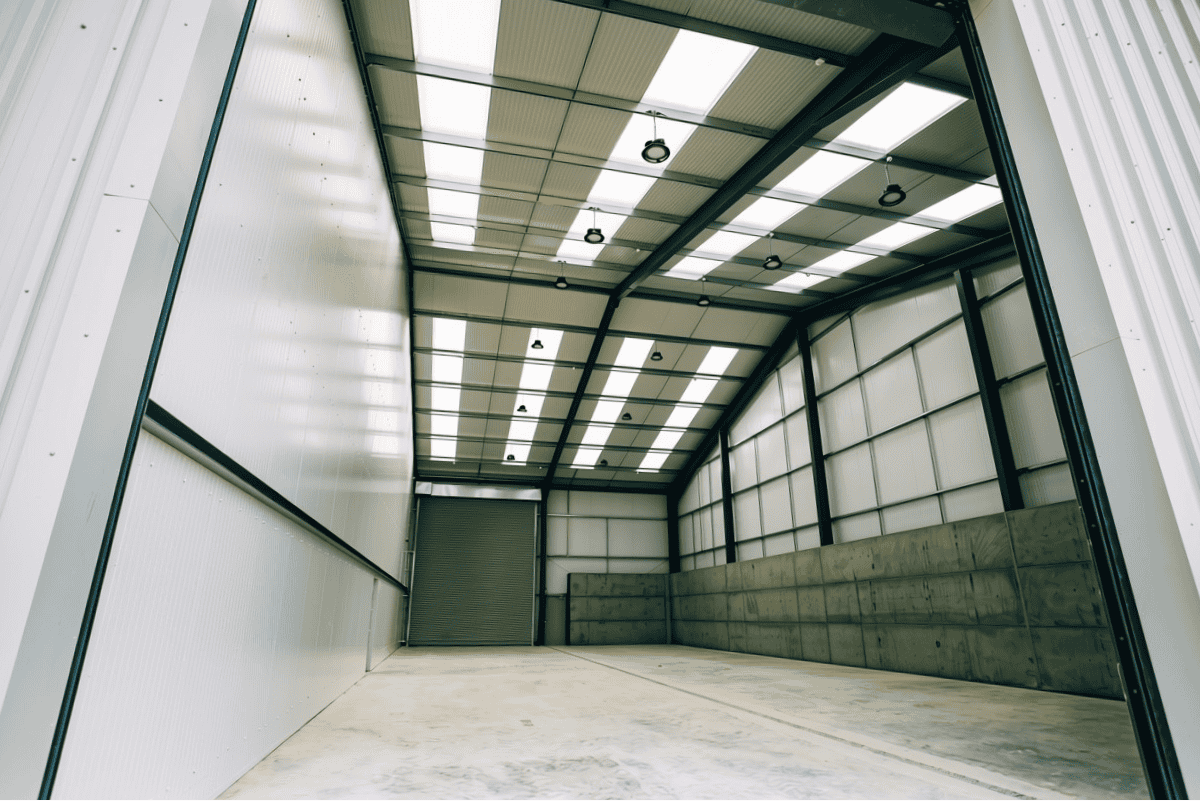
Businesses change faster than buildings. New doors and windows, louvres, canopies, extra headroom and roof-mounted plant all mean altering a structure that was designed for something else. Well-planned modifications can add years to a building. Poorly planned ones can compromise its structural integrity.
Every member is there for a reason
That diagonal bracing in the side wall may look like it’s in the way. It is often what stops the whole building racking sideways in the wind. Columns, eaves ties, roof bracing, side rails and even purlins can all play a part in the structural integrity of the frame. Nothing should be cut, removed or relocated until an engineer has confirmed what it does and how its job will be replaced.
Common modifications and what they involve
- Increasing the roof height to gain clear height for racking, vehicles or new processes. This typically involves splicing extension pieces into the existing columns and lifting the rafters up to the new level, with the frame temporarily supported throughout. The taller frame catches more wind, so columns, bracing, connections and foundations all need checking, and the cladding has to be extended to suit.
- Adding canopies over loading bays or walkways. A canopy cantilevering from the existing columns adds bending and uplift into the frame, so the columns, connections and foundations need checking, along with drainage and snow build-up against the wall.
- Adding roof plant or solar PV adds load to purlins and rafters that may have little spare capacity.
- Hanging new services, hoists or conveyors from the roof steel creates point loads the original design didn’t anticipate.
- Forming openings for new windows, louvres and doors needs new framing (trimmers, jambs and lintels) to carry the side rails and cladding around the opening. A large opening, such as a new loading door, can cut through wall bracing, so an alternative bracing arrangement has to be designed.
- Cladding over existing openings that are no longer needed, with new side rails fixed back to the frame and the cladding weathered in to match.
Temporary works and structural integrity: the most critical stage
A steel frame can be at its most vulnerable partway through a modification. A brace has been cut, the rafters are being lifted, or the new framing isn’t yet connected, so the frame has less in reserve than it had before work started or will have when it’s finished. This is the stage where things go wrong.
While any member is altered or replaced, something else must carry its load and maintain the structural integrity of the frame. That means:
- A temporary works design for props, needles and temporary bracing, prepared by a competent temporary works designer and independently checked to the level the risk requires (BS 5975 sets design check categories for this).
- A temporary works coordinator who controls the process on site, in line with BS 5975.
- A build sequence incorporated into the project-specific RAMS, setting out exactly what is installed, connected and checked before anything is cut, and in what order, and briefed to everyone on site.
- Never removing bracing before its replacement is in place, and allowing for wind on a partly braced frame, including stopping work when conditions change.
The sequence matters as much as the final design, because a sound permanent design can still fail if the temporary stage isn’t planned.
Check for hazards before you start
For buildings built before 2000, an asbestos refurbishment and demolition survey is needed before any work that disturbs the fabric. Old paint coatings may contain lead. Hot works need a permit, a fire watch and a clear area.
Building control and records
Structural alterations are normally building work under the Building Regulations. Keep the calculations, drawings and completion certificate, because the next person to modify the building will need them.
Our approach
ReviveLogix combines engineering checks, temporary works planning and experienced site teams so alterations are carried out safely, often while the building stays in use. Find out more about our extensions and modifications service.